Hue weather at a glance
Hue sits close to the coast of central Vietnam, and its weather is dominated by rain. The figures on this page are long-term monthly averages from the Japan Meteorological Agency for the Hue station, covering 1991 to 2020. They tell you what is typical, not what will happen on your dates, and they are not a forecast.
The pattern is easy to summarize. February to April has the least rain. June is the warmest month on average. Autumn is the wet season, and October is the wettest month of the year by a wide margin.
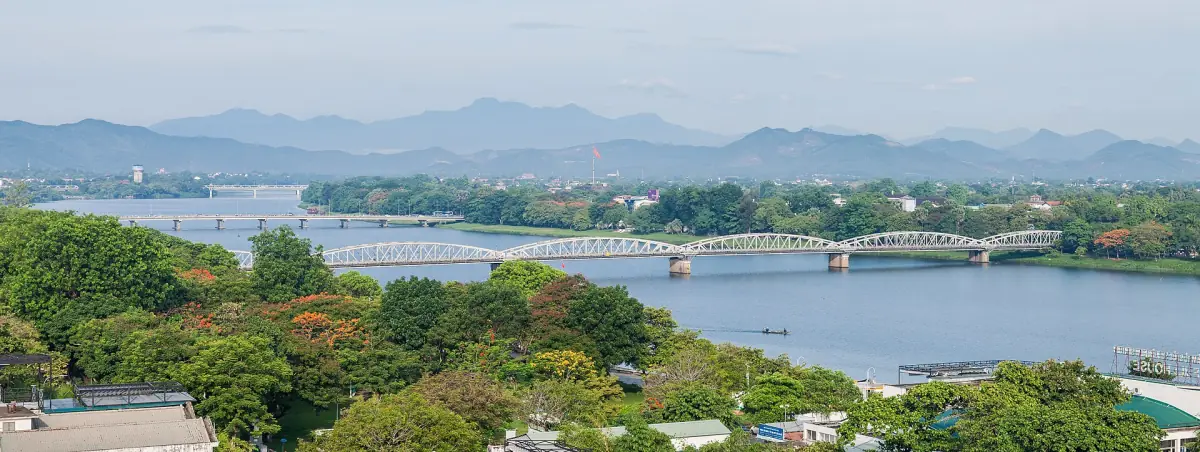
Hue weather by month
Average temperature and rainfall for each month, 1991 to 2020. The temperature is the monthly mean over day and night, so afternoons are warmer than the figure and nights are cooler.
| Month | Average temperature | Rainfall | Rain level |
|---|---|---|---|
| January | 19.7°C (67.5°F) | 156.1 mm (6.1 in) | Moderate |
| February | 21.0°C (69.8°F) | 50.8 mm (2.0 in) | Lower |
| March | 23.5°C (74.3°F) | 63.9 mm (2.5 in) | Lower |
| April | 26.0°C (78.8°F) | 89.0 mm (3.5 in) | Lower |
| May | 28.3°C (82.9°F) | 112.0 mm (4.4 in) | Moderate |
| June | 29.4°C (84.9°F) | 72.3 mm (2.8 in) | Lower |
| July | 28.8°C (83.8°F) | 112.9 mm (4.4 in) | Moderate |
| August | 28.5°C (83.3°F) | 157.9 mm (6.2 in) | Moderate |
| September | 27.2°C (81.0°F) | 439.8 mm (17.3 in) | Very high |
| October | 25.5°C (77.9°F) | 842.7 mm (33.2 in) | Very high |
| November | 23.8°C (74.8°F) | 721.4 mm (28.4 in) | Very high |
| December | 20.6°C (69.1°F) | 458.6 mm (18.1 in) | Very high |
"Lower" means under 100 mm (4 in) a month, "moderate" 100 to 200 mm (4 to 8 in) and "very high" above 400 mm (16 in). The labels are ours, added to make the table easier to read.
Hue tours and day trips
Tombs, the Imperial City, boat trips and day tours from Hue, with live prices and availability.
The wet season, September to December
Four months deliver most of the year's rain. September averages 439.8 mm (17.3 in), October 842.7 mm (33.2 in), November 721.4 mm (28.4 in) and December 458.6 mm (18.1 in). October is the wettest month in this data set, with more rain than January to August combined.
Heavy rain affects what you can do. A boat operator's guide notes that Perfume River trips are limited in October because of rain. Floods can also close sights: in late October and early November 2025, all heritage monuments in Hue were closed for several days, with a short reopening on 31 October. That was last year's event, so read it as an example of what can happen, not as today's status.
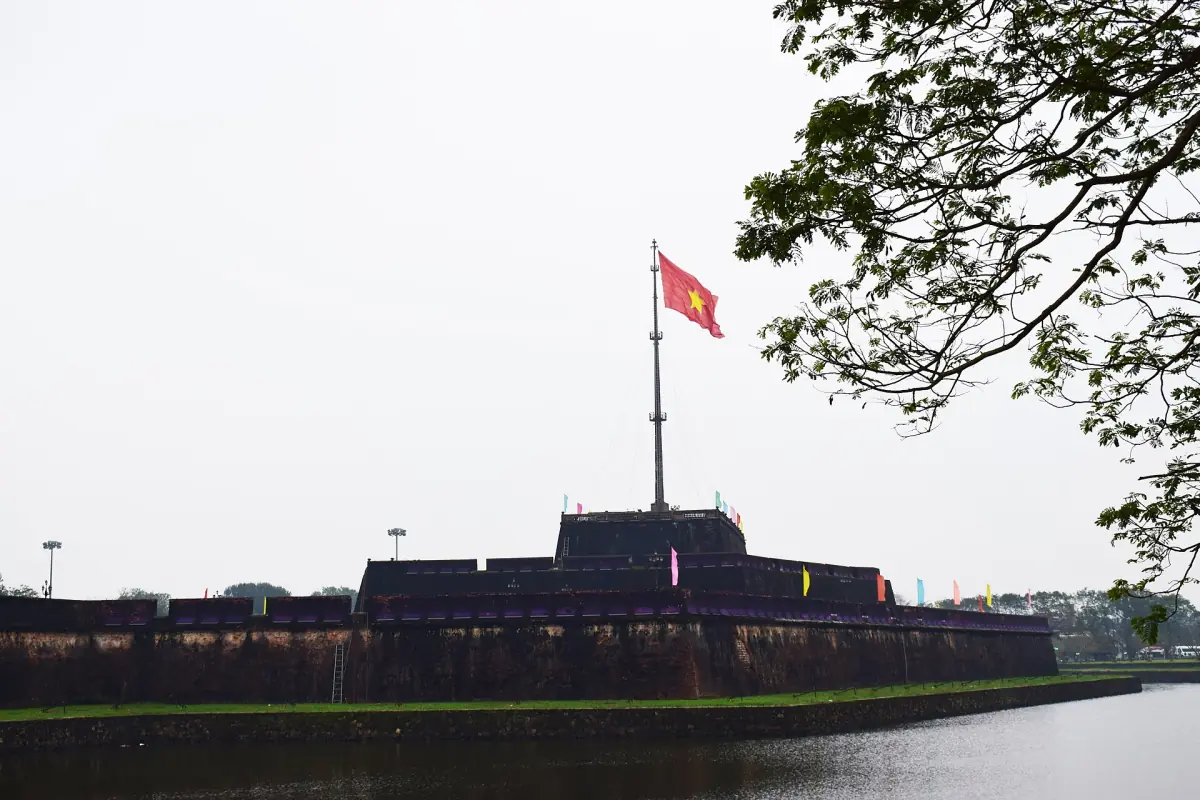
Flooding in October 2026
News reports on 9 October 2026 described flooding in Hue, with more than 800 mm (31.5 in) of rain in the previous 3 days across the wider city area. That figure comes from a press report and is not a reading from the climate station used in the table. On the same day, a resident filed a complaint about flooding on Tran Anh Lien Street in the Vy Da area, covering 6 to 9 October. Neither report proves that any particular sight, road or boat trip is closed today.
If you travel in autumn, check the latest local news and your accommodation before each day's plan. Keep a day or two of flexibility, and be prepared to swap indoor and outdoor plans.
When to visit Hue
A judgment call based on the averages above, not a promise of dry weather.
February to April
These are the three months with the lowest average rainfall, at 50.8, 63.9 and 89.0 mm (2.0, 2.5 and 3.5 in), and temperatures climb from 21.0°C to 26.0°C (69.8°F to 78.8°F). For sightseeing on foot, this is the most comfortable stretch in the data.
May to August
Warmer, with averages from 28.3°C to 29.4°C (82.9°F to 84.9°F) and moderate rain, except June, which is lower. Plan the tombs and the citadel for the morning and expect it to be hot by midday.
September to December
The wet season. If this is when you can travel, build in slack, keep the Hai Van Pass day flexible, and check conditions before every outing.
January
Cooler, at 19.7°C (67.5°F) on average, and with moderate rain at 156.1 mm (6.1 in). A light rain jacket is worth packing.
What the weather means for your plans
The Hai Van Pass is the plan most affected by weather. A transfer operator advises against it in poor weather because visibility is low, so keep that day flexible. The DMZ tour is a long day out, and a long day in the rain is less pleasant. For the city itself, see the Imperial City, and if you are choosing a base, read where to stay in Hue.
If you are continuing south, Hoi An has its own weather page.
Hue weather: frequently asked questions
What is the rainiest month in Hue?
October, with an average of 842.7 mm (33.2 in) in the 1991 to 2020 data. September to December together make up the wet season.
What is the driest time of year?
February to April has the lowest averages, with February the lowest at 50.8 mm (2.0 in). Averages do not rule out rain on a given day.
When is Hue hottest?
June has the highest average temperature at 29.4°C (84.9°F). The figure is a day and night mean, so afternoons are hotter.
Is Hue cold in winter?
The coolest month is January at an average of 19.7°C (67.5°F). It is mild rather than cold, but combined with rain it can feel damp.
Does flooding close the sights?
It can. In late October and early November 2025, all heritage monuments in Hue were closed for several days. Floods were reported again on 9 October 2026, so check conditions before you go.
What is the best month to visit Hue?
There is no single best month. February to April offers the least rain, but if your dates are fixed, plan for the weather of your month using the table above.